
Modern Slavery Risks and Compliance: What Boards and Executives Need to Know

Modern Slavery is the umbrella term spanning illegal acts that remove people’s freedom The United Nations defines modern slavery as “an umbrella term covering practices such as forced labour, debt bondage, forced marriage, and human trafficking. Essentially, it refers to situations of exploitation that a person cannot refuse or leave because of threats, violence, coercion, deception, and/or abuse of power.” Despite being illegal globally, modern slavery persists in all regions of the world, including Australia. Globally, modern slavery is increasing not reducing Modern slavery is a gross violation of human rights. Global authority, Walk Free Foundation based in Australia, calculates that 50 million people worldwide are trapped in modern slavery, with an estimated 41,000 of them in Australia. This is a 10 million increase on the numbers estimated in 2016. Forced labour is the most prevalent problem which makes it a business issue 28 million – nearly two-thirds of all cases are forced labour cases, linked to global supply chains, impacting workers across a diverse range of sectors and at every stage of production. Past reports from Walk Free revealed that a horrifying 12% of those in forced labour are children. Walk Free Global Slavery Index 20231 identifies the top five high risk sectors are electronics, garments, palm oil, solar panels and textiles. With such high % related to labour practices there is a significant responsibility on businesses to identify and fight it. This involves actively identifying, preventing, and mitigating slavery risks within operations and supply networks. By thoroughly investigating and addressing issues, businesses not only protect vulnerable populations but also set a positive example for their stakeholders, contributing to wider societal efforts against modern slavery. Modern Slavery Legislation and Reporting The Commonwealth Modern Slavery Act 2018 came into effect on 1 January 2019. The legislation introduced an annual Modern Slavery Reporting Requirement for large businesses and entities operating in Australia that generate more than A$100 million in annual consolidated revenue. “The dual aim of the Act is to increase business and government awareness of these modern slavery risks, and support entities to identify, report and address the risks.”2 Attorney General’s Department A review after three years resulted in 30 recommended improvements Similar to the UK Modern Slavery Act process, Australia’s Modern Slavery Act 2018 was reviewed after three years in practice, to identify what works and what needs to be improved. In 2023, Professor John McMillan, AO, led the review with support from the Attorney-General’s Department. The objective was to assess the effectiveness of the Act in its first three years of operation.IFRS S1: Sets out overall disclosure requirements for sustainability-related financial information. Hundreds of submissions received The Review invited submissions, receiving 136 written submissions from domestic and international stakeholders, 30 responses to the online questionnaire and 496 responses to the online survey for reporting entities. This delivered extensive feedback provided valuable insights into the Act’s strengths, weaknesses, and areas for improvement. Review recommendations The review made 30 recommendations to the Australian Government. An Australian Anti-Slavery Commissioner will be appointed The appointment of the Australian Anti-Slavery Commissioner is the first direct implementation of a key recommendation from the 2023 Modern Slavery Act review. The Government is currently in the process of selecting the inaugural Commissioner. Responsibilities of the Commissioner a blend of compliance, education and advocacy The Commissioner’s role will be to ensure compliance with the Act’s requirements by businesses and government agencies, raise awareness by educating the public, businesses, and government about modern slavery and its impacts, and advocacy by representing the interests of victims of modern slavery and advocating for their rights and support. The government will provide updates on its progress in implementing some of the remaining recommendations in the coming months and years. This could include legislative changes, policy updates, and additional resources allocated to combating modern slavery. Other recommendations: Expand scope of legislation, due diligence and reporting quality Lower the revenue threshold from $100 million to $50 million to include more organisations The review proposed reducing the reporting threshold from $100 million to $50 million significantly expanding the number of companies required to report. The proposed reduced reporting threshold would include specific guidance for small and medium-sized enterprises to meet their reporting requirements. Tighten due diligence The most substantial recommendation is to impose a mandatory due diligence obligation on reporting entities. This would require companies to assess and address modern slavery risks within their supply chains. Introduce guidance to high risk sectors and penalties for inadequate reporting A further recommendation is to introduce penalties for non-compliance or inaccurate reporting to strengthen enforcement. And providing tailored guidance for industries or sectors with a higher risk of modern slavery, such as agriculture and garment manufacturing, was also recommended. What does this mean for Boards and Executives? Recognise that good practice enhances business value Many businesses view compliance with the Modern Slavery Act as an additional expense or a burden. However, reframing compliance with the regulations as a strategic, business practice improvement and value creating investment can deliver qualitative and quantitative benefits. Adopt an impact, risk and opportunities mindset Purposeful Boards and executives can approach Modern Slavery reporting obligations through the lenses of impact, risks and opportunities, in the same way that they approach environmental and other social responsibilities. Success comes from a two-part response: Systems and Culture Walk Free estimates that $468 billion of goods imported by G20 countries are at risk of modern slavery. Systems This means modern slavery can exist in any business or supply chain, regardless of industry or location. By assuming that risks exist, you can adopt a thorough and vigilant approach to combating modern slavery. This means diligently examining every aspect of your supply chain, including direct suppliers (Tier 1) and their suppliers (from Tiers 2 to Tiers 5-6 including importers, exporters and trading companies). Culture Integrating anti-slavery measures with your company’s core values and ESG strategies underscores the importance of the issue. This alignment ensures that the fight against modern slavery is prioritised throughout the organisation, reinforcing your company’s dedication
Mandatory Climate Reporting is Looming: Are You Ready?

In the rapidly evolving landscape of corporate responsibility and environmental stewardship, one certainty is changing boardrooms and C-Suites forever: Mandatory Climate Reporting. In a keynote speech to Deakin University earlier this year, ASIC Chair Joe Longo spoke about how important it is, “the growing interest in environmental, social, and governance (ESG) issues is driving the biggest changes to financial reporting and disclosure standards in a generation. This is a transformational issue for global markets, and we need to be ready to meet that change at every step of its development.” Governments and regulatory bodies worldwide are stepping up their efforts to ensure businesses are transparent about their environmental impact, particularly their greenhouse gas (GHG) emissions. This transparency aims to provide stakeholders—investors, customers, regulators, and the community—with a clear picture of a company’s contributions to climate change and the measures taken to mitigate these effects. These regulations are not just a trend; they are becoming a fundamental aspect of doing business. Countries like New Zealand and members of the European Union have already implemented stringent climate reporting standards. Japan, Singapore, and the United States are also moving in this direction, with some countries adopting stricter measures than others. With the clock ticking towards the regulations’ implementation in our backyard, every Australian business leader should ask, “Are we ready?” Understanding the ISSB’s role Multiple stakeholders, including accounting boards, investors, multinationals, and regulators, have expressed frustration over the need for interoperability between various sustainability standards. Their two primary concerns are: Lack of Consistency: Different countries and organisations use various sustainability reporting frameworks, leading to a lack of comparability and transparency, especially for investors. Limited Focus on Materiality: Sustainability reports do not always emphasise the most financially material climate-related risks and opportunities for companies. A harmonised global approach offers significant benefits: Streamlined Reporting for Companies: Simplifies the reporting process. Consistent and Improved Data for Investors: Enables more informed investment decisions across multiple jurisdictions. The International Sustainability Standards Board (ISSB) develops and approves sustainability reporting standards for financial markets. It led to the development of the new International Finance Reporting Standards (IFRS), designed to create a common language for financial reporting. The first two standards issued, IFRS S1 and S2, outline the general and climate-related disclosure requirements for companies: IFRS S1: Sets out overall disclosure requirements for sustainability-related financial information. Companies must disclose sustainability risks and opportunities over short, medium, and long-term periods. These disclosures should provide insights into aspects such as cash flows, access to finance, and cost of capital. A key feature of IFRS S1 is its integration with general-purpose financial reports, ensuring that sustainability information is part of overall financial statements. IFRS S2: Complements S1 by detailing specific requirements for Climate-related disclosures. Companies must disclose climate-related risks and opportunities that could influence their prospects, including industry-specific metrics derived from the Sustainability Accounting Standards Board (SASB) standards. Both standards build on and go further than the four pillars (governance, strategy, risk management, and metrics and targets) and 11 recommendations of the Task Force on Climate-related Financial Disclosures (TCFD). The risks to be disclosed include: Transition Risks from shifting to a lower-carbon economy include policy/legal changes, technological advancements, market dynamics, and reputational issues. Physical Risks include acute risks like extreme weather events and chronic risks like rising sea levels. Companies should also highlight opportunities such as resource efficiency, alternative energy sources, innovative products and services, market expansion, and resilience. Aligning Australian standards with ISSB standards Following the ISSB’s announcement in June 2023, the Australian government initiated a consultation on implementing ISSB-aligned requirements in Australia. A proposed roadmap and timeline were released. They initially targeted the largest companies from 1 July 2024 and planned to expand to smaller companies over the next three years. This timeline has been adjusted, and Group 1 reporting is expected to commence on 1 January 2025. On 27 March 2024, Treasury incorporated the recommendations into an Omnibus Bill to adopt Australia’s version of ISSB S1 and S2. This Bill, named the Treasury Laws Amendment (Financial Market Infrastructure and Other Measures) Bill 2024, integrates the reporting changes into the Corporations Act (2001) under the financial reporting obligations section (Chapter 2M). The Bill proposes that reporting begins on 1 January 2025 for the first tranche of organisations subject to the new obligations. 2025: Group 1 – Large Entities Entities meeting 2 of the following criteria: $500m+ consolidated revenue $1b+ consolidated gross assets 500+ employees 2026: Group 2 – Medium Entities Entities meeting 2 of the following criteria: $200m+ consolidated revenue $500m+ consolidated gross assets 250+ employees 2027: Group 3 – Small Entities Entities meeting 2 of the following criteria: $50m+ consolidated revenue $25m+ consolidated gross assets 100+ employees The Bill passed the Lower House on 6 June and now sits with the Senate. Then Parliament has until 2 December 2024 to enact these changes into law. If the Bill passes after this date, the start will be deferred to 1 July 2025. It is also important to note that the Bill does not specify the precise reporting requirements. Instead, it outlines the key components required of organisations. The Australian Accounting Standards Board (AASB) defines the specific obligations and are currently in draft form. Organisations that must comply with regulations in other countries must rely on something other than Australian reporting standards to meet their international compliance. They will need to adhere to the regulations in each jurisdiction. While some countries follow the ISSB model, others do not. Currently, over 20 global jurisdictions have committed to adopting the standards, reflecting significant progress. As a rule of thumb, US regulation is lighter, and EU regulation is more stringent. NZ already follows its own climate change reporting and may not opt into ISSB. Taking advantage of the 1 January 2025 extension Although 1 January 2025 has yet to be confirmed as the official start date, the extension offers businesses a valuable opportunity. Many businesses still need to start, and for those that have, the additional six months provide valuable time to
Maximising Impact: How External Consultants Drive Sustainability Initiatives Forward

In today’s business landscape, sustainability has become a critical component of corporate strategy. Increasing pressure from stakeholders – including investors, consumers, and regulatory bodies – is driving companies to integrate Environmental, Social, and Governance (ESG) principles into their operations. However, navigating the complex terrain of sustainability requires expertise and resources that are often not readily available within an organisation. This is where external consultants are pivotal. They support Sustainability Managers in developing and executing effective ESG strategies and sustainability communications. Understanding the Need for External Expertise Sustainability is a multifaceted domain that encompasses environmental conservation, social responsibility, and corporate governance. Sustainability initiatives also often require cross-disciplinary collaboration that spans supply chain management, stakeholder engagement, and regulatory compliance. Crafting a robust ESG strategy demands a deep understanding of these intricacies and the ability to align sustainability goals with broader business objectives. External consultants bring specialised knowledge and experience to the table. They offer fresh perspectives and innovative solutions that internal teams may overlook, and contribute diverse skill sets and cross-industry insights. This enables Sustainability Managers to leverage a broader range of expertise in addressing complex challenges. A seasoned consultant’s breadth of client experience enables them to customise effective solutions, drawing from a toolbox of proven and adaptable strategies, thus reducing risk and optimising results for the organisation. Driving Strategic Alignment Sustainability Managers must ensure sustainability efforts are closely aligned with their organisation’s corporate strategy. That means ESG goals must be integrated seamlessly into business operations to maximise impact and drive long-term value creation. External consultants excel in helping organisations identify strategic priorities, assess risks and opportunities, and develop actionable plans to embed sustainability across all levels of the organisation. They conduct comprehensive audits and gap analyses to identify areas for improvement and recommend objective and data-informed strategies to address them. Whether implementing renewable energy solutions, enhancing diversity and inclusion practices, or optimising waste management processes, external consultants can accelerate progress towards sustainability targets while improving overall business performance. Navigating the Regulatory Landscape The regulatory landscape surrounding sustainability is constantly evolving. New laws and reporting requirements are emerging at national and international levels. Keeping abreast of these changes and ensuring compliance can be daunting for Sustainability Managers, especially in industries subject to stringent environmental and social regulations. External consultants specialising in sustainability regulations can provide invaluable support in interpreting complex legislation, navigating reporting frameworks such as GRI (Global Reporting Initiative) and SASB (Sustainability Accounting Standards Board), and implementing robust governance structures to mitigate compliance risks. They help organisations proactively adapt their ESG strategies to meet evolving standards and stay ahead of regulatory developments. Addressing Resource Constraints and Accelerating Progress Sustainability Managers must commonly deal with resource constraints when tasked with driving ESG initiatives. Limited budgets, competing priorities, and staffing shortages can hinder the effective implementation of sustainability strategies. This may leave managers overwhelmed and unable to achieve desired outcomes. In these cases, external consultants offer a cost-effective solution. Many provide on-demand access to their specialised skills and resources without the overhead costs of hiring additional full-time staff. External consultants can act as an extension of the internal sustainability team, filling gaps in expertise and capacity as needed. Whether conducting in-depth research, analysing data, or managing stakeholder engagements, consultants can alleviate the burden on internal resources. This allows Sustainability Managers to focus on strategic decision-making and priority relationships and initiatives. Consultants experienced in working with diverse clients across industries can quickly adapt to each organisation’s unique needs and challenges. They can provide flexibility for Sustainability Managers operating in dynamic environments where agile responses and innovative solutions are needed to meet rapidly shifting priorities. Moreover, external consultants bring a crucial element of acceleration to the table. With their specialised expertise and focus, consultants can expedite the pace of ESG progress within businesses facing resource constraints. By leveraging their deep understanding of sustainability frameworks, regulations, and best practices, consultants can swiftly identify critical areas for improvement and implement targeted strategies to drive measurable impact. Enhancing Stakeholder Engagement Effective communication is essential for building trust, credibility and ownership around sustainability initiatives. External consultants can play a vital role in helping organisations craft compelling narratives, engage stakeholders, and communicate progress transparently. From developing sustainability reports and ESG disclosures, to designing stakeholder engagement programs and conducting materiality assessments, consultants can help Sustainability Managers articulate their sustainability story in a way that resonates with diverse audiences. Consultants are also often connected to valuable networks within the sustainability ecosystem, and can facilitate partnerships with NGOs, industry associations, and peer organisations. Companies can leverage these networks to amplify their impact, promote best practices, and drive collective action towards shared sustainability goals. Providing a Supportive Network for Sustainability Managers Navigating the complexities of sustainability initiatives within organisations can be a daunting task, particularly for Sustainability Managers who may feel isolated in their efforts. The role often entails balancing competing priorities, managing stakeholder expectations, and driving change across diverse functional areas, all while facing resistance from internal stakeholders already feeling stretched. External consultants serve as more than just advisors; they provide a valuable support network and forum for Sustainability Managers to seek advice, share experiences, and gain perspective from peers facing similar challenges. Peer Learning and Knowledge Sharing: External consultants can connect Sustainability Managers with other professionals in the field to facilitate peer-to-peer learning. Through workshops, roundtable discussions, and networking events, consultants can create a forum for sharing best practices, lessons learned, and innovative solutions to common sustainability challenges. This collaborative environment fosters a sense of camaraderie and solidarity among Sustainability Managers, and empowers them to learn from each other’s experiences and collectively drive progress towards shared sustainability goals. Access to Industry Insights and Trends: Keeping abreast of emerging sustainability trends, regulatory developments, and industry best practices is essential for effective decision-making and strategy development. External consultants offer access to a wealth of industry insights and market intelligence to provide Sustainability Managers with timely information and analysis to inform their initiatives. Staying informed about the latest trends and benchmarks helps Sustainability Managers
IWD: From Inspiration to Action – A Retailer’s Roadmap for Creating Change

Unlock the power to create authentic impact for women in retail! We’re excited to invite you to our upcoming webinar on Thursday, 15 February, where we’ll delve into the imperative for retail businesses to move beyond talk and embrace evidence-based action. Panellists Rosanna Iacono, CEO and Co-Founder, The Growth ActivistsJustine O’Byrne, ESG Manager and Supplier Liaison, CamillaMichele Molnar, Director, Cancer ChicksJeremy Meltzer, CEO & Founder, i=Change Why Attend? Actionable Insights: Gain practical takeaways for immediate implementation.Real Case Studies: Learn from successful examples and inspiring stories.Brand Impact: Position your brand as a force for positive change.Network: Connect with like-minded individuals in the retail space. Date & Time: Thursday, 15 February, 11.00am-11.30amFocus: Shifting from talk-fests to evidence-based action in retail.Topics: Stakeholder inclusion, long/short-term strategies, and inspiring case studies that are changing lives. Be part of this transformative session as we explore strategies that go beyond the ordinary, leaving a lasting impact on women in the retail sector. Reserve Your Spot Now! Please register for replay if unavailable on the day.
Elevating the ‘G’ in ESG: The critical importance of good governance

It’s no surprise that the environmental and social performance of businesses has come under greater scrutiny in recent years. As we face up to environmental and social challenges as a global community, all stakeholders — consumers, employees, investors, shareholders and the community — demand higher standards and more transparency into the environmental and social performance of the companies they support. That’s why more organisations have been implementing environmental, social and governance (ESG) strategies. Best-practice ESG creates a formalised structure that seeks to identify, implement, monitor and measure the critical success factors that determine a company’s environmental, social and financial performance. However, while most outward focus falls on the environmental and social pieces of the ESG puzzle, good governance — the ‘G’ is ESG — comes before all else. Governance drives company culture and sets performance standards across the organisation. It determines the effectiveness of your day-to-day operations, and takes a long-term view to inform effective and consistent decision-making. The Critical Importance of Good Governance Here’s how best-practice ESG management can improve your governance and set your business up for short- and long-term success… Build a better board Board composition is a critical success factor for companies in today’s complex business environment. ESG sets a board strategy that seeks to identify and recruit the right board members to drive your company’s mission, vision and objectives. Diversity in skills, experience, background and gender on the board creates the wide perspective your company needs to most effectively negotiate present and future challenges. At board level, an effective governance strategy also aims to avoid conflicts of interest among board members, and maintain support for a clear and unified strategic direction for the company. Ensure compliance Effective ESG strategies identify your company’s regulatory compliance obligations, implement a compliance plan, and monitor compliance performance. Compliance management is an important step to achieving best-practice operation. It helps companies to avoid financial penalties for non-compliance and protect against reputational damage. It also helps to ensure operational stability, and builds investor confidence. Optimise business processes Good governance takes a big-picture view of your organisation. ESG reviews your business processes and identifies areas for improvement. It breaks down departmental silos, connects workflows and fosters collaboration across the organisation. This is how companies build genine agility. An agile company can respond to challenges as a single unit, and mobilise organisation-wide business processes to deliver unified, strategic solutions. That doesn’t happen without good governance. Proactively manage risks Governance strategies seek to identify risk factors and implement proactive action plans to mitigate risks before they impact the business. This may involve maintaining updated risk management processes and disaster recovery plans. With the right governance approach to risk management, your company can move from simply weathering a storm to finding the silver lining in the cloud. The Covid-19 pandemic certainly made this clear for many companies. According to Oxford Business Group’s ESG CEO Survey, more than 60 percent of respondents said that the pandemic has either moderately or significantly impacted their understanding and/or appetite for ESG. Monitor and review performance Transparent management reporting is an important principle of corporate governance. ESG strategies set a range of metrics that are used to measure the company’s key performance drivers on an ongoing basis. This helps to inform data-based decision-making at management and board level, draw out real business insights, and enables a proactive and consistent approach to keeping the company’s operational processes and resourcing aligned to achieving its business goals. Best-practice reporting is also critical for demonstrating business integrity, providing transparency to shareholders, and building long-term investor confidence. Governance is essentially the DNA of your company. It impacts everything from company culture and day-to-day business processes, to board-level decision-making and the overall strategic direction of your company. Without good governance, your company is operating on a wing and prayer. With good governance, it is an agile, unified unit on a well-defined path to achieve shared business goals. The Growth Activists can help you achieve best-practice governance with an effective ESG strategy. Contact us at hello@growthactivists.com for a chat about how we can turn proactive thinking into ESG action.
Solving the Social Dilemma: Best-practice ESG management for business
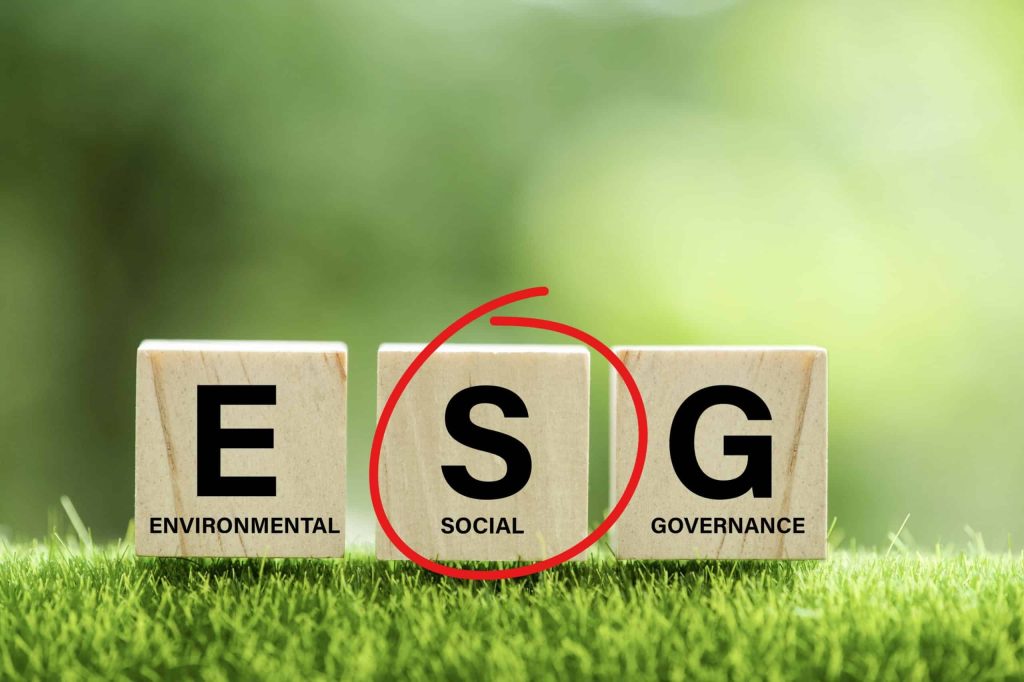
The fight against climate change has proved business can be — and must be — a force for good. Look around and you’ll see commitments to sustainability transformation in just about every aspect of business. From organisation-wide carbon audits to powerful decarbonisation strategies, so many businesses are putting their best foot forward in the march toward saving the planet. This proactive approach to environmental management is also good for the bottom line. But it’s not just about impressing shareholders. There are multiple stakeholders in play. Customers want to support eco-friendly operators. Employees want to work for businesses that do good for the planet. Investors and shareholders increasingly see stability in sustainability. Suppliers want to be part of eco-conscious networks. We’re not telling you anything new here. But the obvious move to eco-friendly business demonstrates the skyrocketing value businesses are placing on understanding and adhering to best-practice environmental, social and governance (ESG) standards. However, environment is only one aspect of any good ESG strategy. The way your business approaches its social responsibility — the ‘S’ in ‘ESG’ — is just as important as how you handle your environmental impact. Best-practice ESG Management for Business The Importance of the ‘S’ in ESG Sub-standard labour practices in your supply chain, employees who feel under-paid or under-valued, and any negative impacts your business may be having on the greater community can destroy your brand’s reputation — and customer base — with a single viral social media post. But looking after the ‘S’ in ‘ESG’ isn’t just about protecting your reputation. There are other real business benefits. When business leaders put purpose first, good things happen across the board. Making sure your people are appropriately paid, treated fairly, have access to development and training opportunities, and are cared for with wellness initiatives boosts engagement, productivity and retention — and your profits. A study by the Global Wellness Institute found that companies with more engaged employees report 22 percent higher profitability. Your customers are watching too. According to an IBM research report, 40 percent of consumers are purpose-driven. They seek out products and brands that align with their values, and are willing to pay a premium for them. Focus your approach That’s all well and good, but understanding the social responsibility landscape can feel overwhelming. No one company can solve all the world’s problems. But you can make a difference in a few focused areas. For starters, you need to clearly articulate your company’s core values and mission. This will serve as a map to guide you when choosing social issues to engage on, and will help ensure your ESG actions stem from your company’s overall purpose or intent. Then, you need to assess your current social impact and identify your strengths and vulnerabilities. What are you already doing well? Where do you need to improve? And how will you direct your social focus to further your mission and live your core values? This is the business of social innovation. It’s about knowing when to take the lead on the social issues that align with your core values. Knowing when to team up with other organisations or foundations to share the load. And knowing when to step back on issues that are not relevant to your company’s purpose. Measure your social impact To quantify your social impact, you need to effectively measure your ESG actions. When it comes to social responsibility, you can see your performance in analytics like customer loyalty, employee engagement and brand awareness. As you build an engaged network of employee and customer advocates who stand shoulder-to-shoulder with you on your social actions, you’ll likely see a few things happen. Customers will become more loyal to your brand; employees will engage with their purpose-driven mission; and you’ll build more brand awareness as you’re seen out in the trenches of social advocacy. It’s a win-win situation. Best-practice ESG strategy has the power to transform your business into a genuine force for social good, while delivering tangible bottom-line benefits. The Growth Activists can help your business become a force for good. Contact us at hello@growthactivists.com for a chat about how we can turn proactive thinking into ESG action.
5 Tips for Bringing Your Brand’s Decarbonisation Strategy to Life

[vc_row][vc_column][vc_column_text] After ranking last for climate policy among more than 60 nations, the Australian government’s climate change performance was widely slammed at the recent UN COP26 summit. Fortunately, the Australian business community has its eyes wide open to the climate challenge. According to a global Deloitte report, 81 percent of Australian business leaders believe climate change will negatively impact their operations. This is more in line with community demand for climate action, and it is now an imperative for businesses to place societal responsibility at the heart of their strategies. Speaking at an online forum organised by Trans-Tasman Business Circle, Jon Briskin, Executive General Manager of Retail at Origin Energy, said this imperative is being driven by skyrocketing customer demand for environmentally-responsible brands. “Customers clearly want to purchase from brands they trust, and that they believe will do the right thing for the planet,” he said. “This change in customer sentiment is not linear. It is absolutely exponential, and it’s just taking off now.” 5 Tips for Bringing Your Brand’s Decarbonisation Strategy to Life Here are five things you can do to help tell your brand’s decarbonisation story: 1. Be authentic Authenticity is critical to creating the brand trust consumers are craving. And that means implementing genuine and measurable steps to decarbonise your business, with transparent Environment, Social and Governance (ESG) reporting. “Tangible ESG objectives and outcomes are far more important than they have ever been,” Briskin explained. “We all saw the green washing of brands, and a lot of that gets called out now. Customers see through it. You need to express proof points that show how you stand behind your brand promise.” 2. Get certified Briskin said that obtaining proper certifications is important to building transparency and trust. At The Growth Activists, for example, we help companies achieve BCorp certification that demonstrates the business adheres to the highest standards of verified social and environmental performance. 3. Tell your story You’ve done the work, now you need to tell your story. But when it comes to sustainability, there is no finish line. The bar keeps getting higher and higher, and you need to continuously engage with your customers to keep telling the story of your brand’s on-going decarbonisation. This storytelling needs to happen at the individual customer and at the community level. At The Growth Activists we assist businesses to craft those narratives with credibility and authenticity. We also enable their employees to share those stories with confidence, which is critical for truly powerful activation of their ESG efforts. 4. Engage with the individual You need to make your decarbonisation story part of your customers’ day-to-day lives. This will keep the conversation going, and position your brand as part of your customers’ personal sustainability efforts. “For example, at Origin Energy our ‘Spike’ initiative allows customers to earn rewards when they reduce their energy use in peak demand periods,” Briskin said. 5. Engage with the community You need to tell your decarbonisation story at a community level too. For example, Octopus Energy in the UK purchased community-based wind generation assets, and offered discounts to local residents whenever the turbines were spinning. “Within a couple of weeks they had 800 communities across the UK asking if they could join the Octopus Fan Club and get those wind generation assets in their communities too,” Briskin said. But it all depends on authentic actions, measurable outcomes and transparent proof points. Make a real ESG commitment, measure and prove it by adopting credible impact-measurement standards or by undertaking BCorp certification, then engage your customers and their communities with continuous storytelling. The Growth Activists are experienced B Consultants. We’re here to support organisations through the complex B Corp certification process with the right advice for your business. Get in touch to learn more about how we can help. [/vc_column_text][/vc_column][/vc_row]